
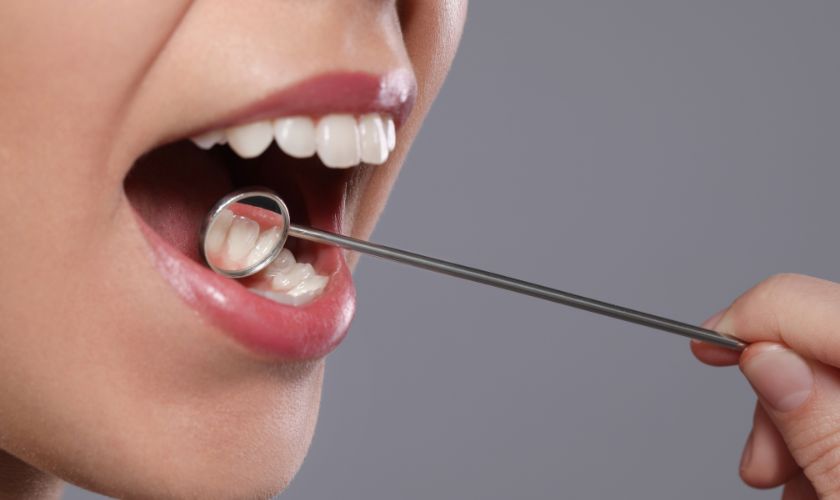
In San Diego, people often discover oral cancer when they go for routine dental examinations. However, because the illness usually exhibits no symptoms in the early stages. Therefore, it is essential to monitor changes in the oral cavity, especially among those who often use tobacco products and drink alcohol. In addition to a physical examination of the mouth, various tests or procedures in a dental office in Pacific Beach, San Diego, are designed to help detect oral cancer.
Ways to detect and treat oral cancer
There are various tests available in a dental office that can detect oral cancer at early stages. Here are some of the procedures to detect oral cancer:
-
Barium Swallow
A barium swallow test can show abnormalities in the mouth, throat, larynx, and surrounding tissues. It can also often identify small, early oral cancers.
-
Biopsy
An oral cancer diagnosis can only be confirmed by a biopsy. A biopsy must be performed before the start of treatment and requires a specimen of tissues or cells. Typically, oral cancers are diagnosed using one of two types of biopsies.
-
Incisional Biopsy
A small amount of tissue is removed from a region that looks abnormal. A doctor’s office may be the place for the sample collection if the abnormal region is easily accessible. A general anesthetic may need to be given during the biopsy procedure in order to reduce pain if the tumor is located farther inside the mouth or throat.
-
Exfoliative cytology
A suspicious region is gently scraped to get a sample of cells. In order to allow for easy microscope viewing, these cells are put on a glass slide and colored with dye. A deeper examination will be done if any cells seem suspicious.
-
Dental Examination
It is usually recommended to have a dental exam before undergoing radiation therapy for oral cancer.
A prosthodontist is a specialist who designs prosthetic alternatives that restore look, comfort, and function after treatment when teeth or other parts in the oral cavity must be removed.
What is the early sign of oral cancer?
The first indications of oral cancer are often overlooked since they might be hard to recognize. Numerous locations, including the lips, inner wall of the cheeks, gums, salivary glands, hard palate, tongue, and soft palate, are at risk for this type of cancer. A mouth cancer may show up with a range of warning symptoms based on where in the mouth it first appears.
As part of an ordinary dental check-up, many dentists conduct an immediate oral cancer screening because they maintain an active role in their patients’ oral health. This usually includes a check for possible cancerous growths on the face, neck, and entire mouth and lips.
Is oral cancer treatable?
Mouth cancer can be cured by doctors at any stage. On the other hand, the more severe a person’s cancer is, the more difficult it could be to treat. After therapy, lip and mouth cancer may also return.
Cancer may only be found in one lymphatic node on the same part of the neck as the main tumor in stages 0, I, II, or III. It might be easier to treat these stages.
When cancer is in stage IV, it has traveled to other bodily parts and requires a more rigorous course of therapy.
Doctors might continue to be able to treat cancer in stages IV, A, and B because by then, it has spread to the lymph nodes and is no longer limited to the neck area.
How can you prevent oral cancer?
You can prevent oral cancer if you follow the steps mentioned below:
- Visit your dentist regularly. Do not miss your appointment.
- Stop smoking. Smoking has a greater chance of forming tumors.
- Check your mouth for signs. After brushing your teeth, take some extra minutes to look inside your mouth in the mirror.
- Be aware of the symptoms of mouth cancer.
